
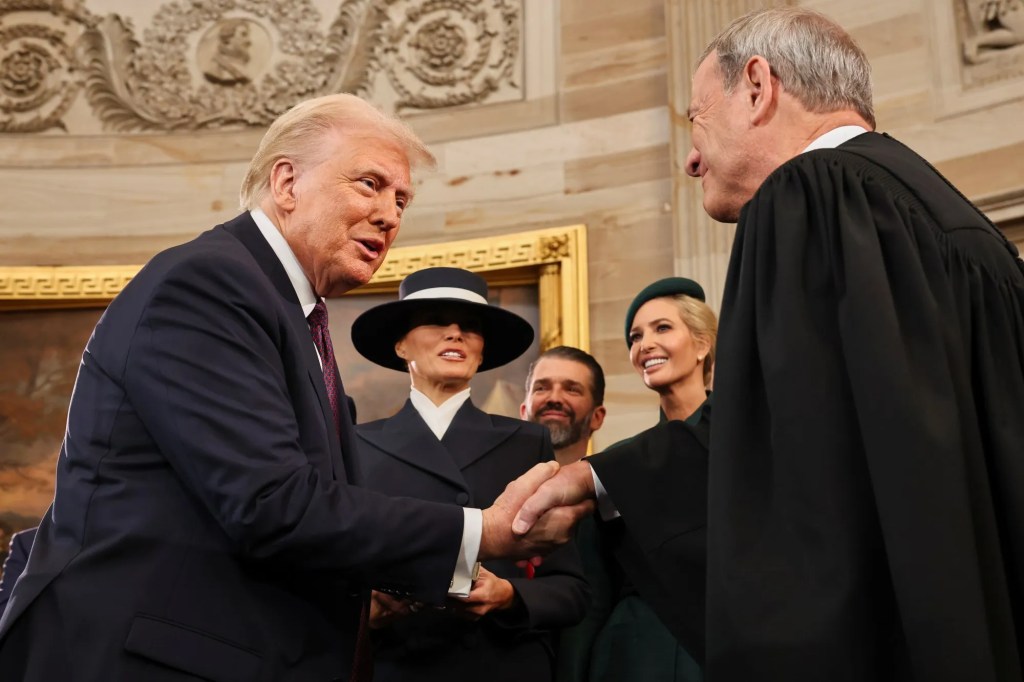
After 4 years of vertigo, I think I speak for the lot when I say all we want is a little normalcy. In the spirit of keeping it light and embracing what should seem like a continuation of the vicissitudes of slaps to our faces, I’ll try and make this seem as nuanced as possible — 2025 doesn’t have to be the year where the only constant is our empty bank balances and a occassional existential crisis. It’s only January and yet it seems as if we’ve settled into the year rather bluntly with the introduction of events that undoubtedly will be revisited as epochs of our decade. In this little piece I shall yap about two such events, namely
All of these issues, perdurable in significance, earmark the beginning of what will be a tumultuous year of bated ambivalence.
* ps: take everything I write here with a pinch of salt — these are just some passing thoughts and should not be interpreted as the words of a professional 😦
The Man of Dangerous Precedents
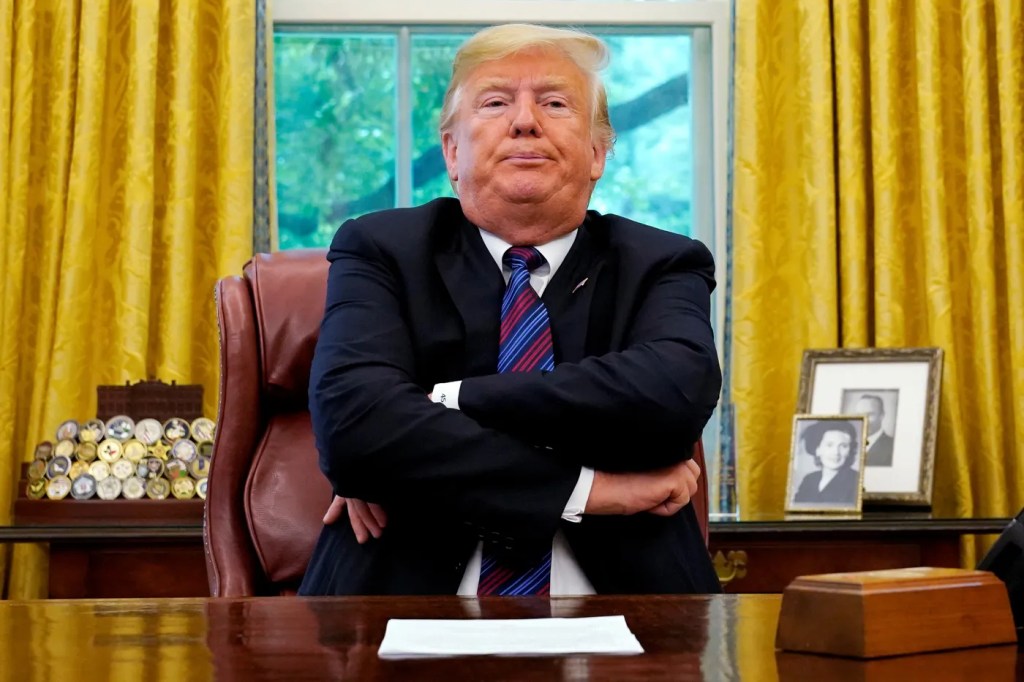
In my discourse, I’ve faced dispersion amongst what individuals perceive this reiteration of Trumpism to be. The panglosses of our day look favourably at the nuanced legacy of the first stint, capped by novel pockets of peace (the Trump-Kim Summit in Singapore, Abraham Accords, detente with North Korea and arguably the most respectful act towards China) and remain optimistic for a continuation for such in a world dogged by conflicts and unncessary human suffering. The other spectrum exists too with a certainly much wider range of issues to draw chagrin at — with the failures of protectionism in 2018, the erosion of civil rights and liberties or the setting of a dangerous precedent towards the expectations of the most powerful man on Earth all raising valid concerns. I believe the truth lies outside the spectrum, in the true Don fashion. This man never fails to astonish.
Just to make it clear, Trump has always been a populist, but the widespread agreement amongst liberals regarding the Democratic party’s failures reflect a wider malady of American society — the hubristic nature and excess over-confidence. The Democrats, by failing to recognise Trump has been much more machiavellian than given credit for, allowed Trump to weaponise and politicise the anger of Americans towards the costs of living, crime and porous borders. The result of not heading to the primaries, the insistence in hoodwinking the electorate regarding the health of President Biden and subsequently the ferocity in tearing him down bulldozed the remains of American trust in the party, handing over the Presidency to Trump on a silver platter. This hubris is something we will continue to contend on in the later half of this essay.
Since ascending to the Presidency, Trump has played his hand at a dangerous political game of antagonising allies and appeasing his enemies. He has in a tremendously short span invoked the ire of the Canadians, Greenland, Denmark, Columbia, Mexico… and threatened the return to a beggar-thy-neighbour world, all whilst American adversaries in the East grow in strength and reaffirm their alliances. Despite how conventional media outlets paint Russia to be on its last legs, the Russian war pipeline remains relatively robust with the war economy fully mobilised to embolden Putin to engage in a war of attrittion. As the West grapples with commitments to Ukraine and economic malaise domestically and a revisionist American President looking to rework its alliances, Putin rightfully so sees strategic leverage on his side, demanding significant territorial losses from the Ukrainians and a crippling of their democratic processes.
Colour me blind, but there is no good justification for the American position to be one that alienates allies, infringes on its neighbour’s sovereignties and treating competitors better than it does to its friends. As long as Trump is unwilling to adhere to diplomatic decorum, American strength both domestic and abroad will continue to ebb, even with genuine concerns regarding its borders it needs Mexican and Canadian involvement in. Threatening the use of military action to take in the Suez Canal, Greenland are unfathomable acts for the leader of international institutions and shouldn’t be reflective of where Pax Americana would like to be in the decades to come.

I also strongly disagree with the implications of a common school-of-thought regarding the use of Trump’s aggression on the international stage. This perculiar justification contends Trump is ostensibly aggressive in a Door-in-the-face manner to bargain for American interests, i.e. threats to Canadian, Greenland’s sovereignty to secure favourable policy implementations. This cannot be the case, and is unbecoming of a major politician who is unable to adhere to the pro formas regarding diplomacy. The only effect Trump will reap is to push non-aligned nations to the Eastern bloc and weakening partnerships around the world. This was a tweet just earlier this day by the Columbian President Gustavo Petro. In what world does this sound like the Trump aggression is working?

This is somewhat of my own personal take, which may be wrong; I can’t say that I have had the pleasure of spending extended periods of time around the Americans and have elicited the American psyche — but I do believe Americans, pampered by decades of soft power instruments that demonstrate American strength, manlihood and dominance (think Hollywood) have taken up a powerbully-esque world view. These Americans, typically the under-educated majoritarian groups espouse the use of strongarm politics, seeing ‘virtue and glory’ in bullying their way through diplomatic partners, and this has led to an America that takes pride in its unpredictability as an ally to the free world. Whilst being unpredictable and bossy does make a cool story and an exciting American movie, the message American actions send to the rest of the world depict a reality where assets and reserves held in America pose sovereignty risks, and any country friend or foe can find themselves quickly under the crosshairs of the erratic Don.
Onto the trade issues, for which Singaporeans who would went through the indoctrinated education system preaching the beauteous nature of free market economics, the reaping of Ricardian efficiencies and how the world would be better off if all countries implemented porous trade borders, the reality is often a little more nuanced.
Sometime ago I chanced upon an article by a trade advisor to the Trump team on the Financial Times, haranguing decades of failed American leadership to stop the practice of running trade deficits and “allowing foreign businesses to buy up American capital and goods which could have been used to increase American productivity” (vaguely, I don’t remember the quote exactly nor am able to remember what the name of the author was). Trump has largely walked the same tone, demonstrating the desire to rebuild America of the 1700-1800s where federal budgets were largely funded by tariffs (up to 95%).
Some key differences remain in the implementation of tariffs to fund the federal deficit. Whilst the world was much less interconnected and countries relied on the leverage of colonial influences to provide key resources and hence tariffs were largely ignored without retaliation, the world today is much more dependent on global trade tenets and retaliation against protectionist principles are mutually destructive policies sovereigns will not shy away from making, similar to how the Smoot-Hawley Act of 1930 haemorrhaged the American economy. This factor, aside from the relative ease of implementation of tariffs in the 1800s and the differences in trade balances between 1930 and today, should remain the key critique of the wide implementation of tariffs.
I also believe that the American trade deficit remains a pillar of American primacy. Whilst America remains the global reserve currency issuer and exports its Dollars to the rest of the world, it becomes able to leverage Ricardian efficiencies and specialise in key value-added industries which are increasingly in today’s regime of techno-nationalism, vital pillars of American strength and sovereignty. In doing so, America sees foreign nations who are faced with an accumulation of American foreign reserves, direct their savings towards American businesses and subsidising American growth and innovation; or indirectly by purchasing Federal debt, keeping the cost of credit low and allowing America to fund projects such as the Inflation Reduction Act and committing large sums to build American competencies.
Hence, I don’t see a compelling case to overly focus on the fact that the US runs trade deficits with certain nations, and who those nations are. Strategic leverage goes both ways — America may be outsourcing strategic interests, leaving vulnerabilities to the use of geoeconomic confrontations; while surplus nations hold significant portion of reserves in Dollars and keenly rely on American dollar funding lines to stay solvent. What is the point of focusing on only the negatives, especially when such partners are key American allies?
What I believe to be particularly concerning is the dangerous precedent Trump and his malfeasance represents, especially with a President that disregards the credos of decorum. I am having a hard time grappling with the gamut of thoughts I have. Not long ago, I came across this intriguing article titled The Tale of Two Caudillos, regarding the triumph of democratic processes in Brazil vs the lack of accountability the Capital of Freedom and Democracy holds Trump up to. To make a long story short,
- Like Trump, Bolsonaro waged war on democratic institutions, but in Brazil, the institutions are winning
- Trump’s administration and that of Brazilian President Bolsonaro shared an approach of attacking the press, undermining judicial independence, promoting Christian nationalism, persecuting political foes, sowing doubts about the legitimacy of the electoral system and attempting to stay in office by undemocratic means
- Bolsonaro’s hardcore followers staged their own attempted coup a year after Trump’s, storming government buildings to prevent the peaceful transition of power
- Yet four years later, Trump has been re-elected by a comfortable margin and Special Prosecutor Jack Smith filed to drop all federal criminal cases on the grounds that the Constitution forbids the indictment and prosecution of a sitting President
- Bolsonaro in contrast has been convicted of spreading election misinformation and banned from running for public office for eight years, likely to end his political career. In November 2024, he was also charged by the police for plotting a coup to stay in power after 2022, while he remains under investigation for mishandling the Covid-19 pandemic and illegally keeping gifts
- The consensus surrounding this disparity is that the need to protect democracy is felt much deeper in Brazil, where the country keenly remembers its days from 1964-1985 under a brutal military dictatorship, motivating politicians and lawmakers to make it an urgent priority to uphold and strengthen democratic institutions and norms
Maybe the legacy of Trumpism will be ephemeral, and subsequently we will see a return to normalcy. Yet we should remain acutely aware of populist leaders who rise in times of painful transition; think Hitler during the fall of the monarchy and the establishment of a Republic, and in the present day where we navigate a transition from a clear unipolarity to a multipolar world. In the end, an America that is unwilling to uphold standards of democracy will not remain the envy of the world and see their exceptionalism erode.
The recent issuance of the Trump family ‘memecoins’ also provide a horrendous impact on the Decentralised Finance (DeFi) narrative, of which I am a holder and have a vested interest in seeing my bags stay pumped. On no Earth should the President of the United States, the Poobah of the Free World and the living piñata of justice, hope and liberties be grifting retail investors! The $TRUMP token, of which his family business holds 80% of the float and profits from trading fees provides a glaring conflict of interest, blurring the lines between public service and personal enrichment whilst providing a direct and untraceable line of bribery. In addition, in an industry struggling to find a footing to establish itself as a legitimate driver of change, Trump threatens to reduce the DeFi narrative into one which has already been plagued by accusations of fraud, speculation and a lack of credibility; putting at risk thousands of legitimate developers and innovators who leverage a perfect sandbox environment in the DeFi space to come up with creative solutions of robust and necessary funding lines. Moreover as the President of dangerous precedents, Trump risks commoditising influence and eroding institutional guardrails.
Another dangerous precedent Trumpism is invoking is a rework of frameworks to ensure the rule of law in favour of the rule of man. Within the past few years since the end of the first Trump administration, we have seen the politicisation of legal oversight with regards to actions taken in the lead-up to the January 6th insurrection. The result has been a fractious reality where all actions against political figures regardless of action or missteps are easily spun into political levers by the “deep state”, creating a verity of political immunity, and his subsequent pardoning of Jan 6 insurrectionists has degraded the rule of law and beckoned his followers to remain loyal to him. In any functioning democracy, comments such as “I’ve raised a lot of money for the next race that I assume I can’t use for myself, but I’m not 100% sure” should raise severe red flags and provoke protests over the unconstitutional threats posed, but we will now live in a world where legitimate legal concerns are unable to invoke independent decisions due to an overarching fear of political backlash, allowing policymakers to act unchecked.
DeepTruths

For those that have been living under a rock…
What exactly is DeepSeek?
“DeepSeek was founded in 2023 by Liang Wenfeng, the chief of AI-driven quant hedge fund High-Flyer. The company develops AI models that are open-source, meaning the developer community at large can inspect and improve the software … The company claims its R1 release offers performance on par with OpenAI’s latest” ~ Bloomberg
And in true AI fashion, I tasked ChatGPT to provide a brief introduction to DeepSeek (DeepSeek itself was down):
“DeepSeek is a Chinese artificial intelligence startup that has recently garnered significant attention for its rapid advancements in AI technology. Founded in 2023 by hedge-fund manager Liang Wenfeng, the company has developed open-source AI models that rival those of leading Western firms. Notably, DeepSeek’s AI Assistant has become the top-rated free application on Apple’s App Store in the U.S., surpassing ChatGPT.
One of DeepSeek’s remarkable achievements is the development of its specialized model, R1, designed for complex problem-solving. This model has achieved global top 10 rankings despite being trained with less advanced chips, highlighting China’s innovative AI progress even amidst export restrictions.
DeepSeek’s success has also had a notable impact on the financial markets. The company’s efficient AI models, which operate with less powerful hardware, have raised concerns about the future demand for high-end chips, leading to declines in the stock prices of major semiconductor companies. “
I titled this segment ‘DeepTruths‘ because my view has been that the release of DeepSeek isn’t just a shock, but a lasso of truth that provided the stripped-down veritas the West should be taking seriously.
Truth #1 — The Hubris of the West
To spare me some precious time on the eve of the Chinese New Year, allow me the privilege to simply share a tweet by Arnaud Bertrand, a phenomenal individual who I’ve come to appreciate regarding pieces on American unilateralism and hubris.
“That’s actually a fantastic illustration why Western media’s bias on China actually hurts the West more than it does China. Deepseek is only “startling” if you based your understanding on China off reporting by the likes of The Economist, who keep picturing a China as a cartoonish version of itself: a monolithic villain always on the edge of collapsing, plagued by intractable problems that put it at a significant disadvantage versus an exceptional U.S. I’m not even exaggerating. Just last quarter the Economist was running an article on how China was “making some of the mistakes the Soviet Union did” , unironically (and with a stunning lack of self-awareness) writing that “bad information is a grave threat to China’s economy”. Meanwhile, almost simultaneously, they published a special report on “the American economy, the envy of the world” . As a reminder, in 2024 China’s economy grew by 5% to the US’s 2.8%… If you had an accurate understanding of what was actually going on in the country, you’d know that China wasn’t actually “far behind” at all in AI as The Economist writes. In fact at the same time as they were writing that China was going the way of the Soviet Union I was pointing out that China was already leading the U.S. in 6 out of 7 AI fields . The only field they weren’t leading in (they were a close second) was Natural Language Processing, i.e. LLMs like ChatGPT. And, low and behold, Deepseek shows that they’ve now caught up in this field too. I also wrote at the beginning of last year that when you look at top-tier AI talent worldwide (the very best AI developers and researchers), an astounding 47% of them were Chinese, vs 18% American . It doesn’t take a genius to figure out that if you have half the world’s best AI talent, you ought to be insanely good in the field… You could also have looked at patents and noticed that, according to the World Intellectual Property Organization (WIPO), since 2017 China has published more patents in the field of generative AI each year than all other countries combined . Or you could have looked at high-impact research, meaning the most cited research articles, and noticed that already in 2019 China has reached parity with the U.S. in share of the the world’s top-5-percent AI publications . This all shows that you can only be “startled” and you could only have thought that China was “so far behind” in AI if you really weren’t paying attention. Or if you had such delusional biases that you were completely blind to the realities of the world we actually live in. And, to go back to my original point, it’s not China that gets hurt by this blindness. If you don’t understand your rival and see them as a grossly misleading caricature, you hurt yourself. When you reduce China to a cartoon villain you miss the actual story and get blindsided as is obvious with the Deepseek episode. I’d argue that very much the same mechanism is at play with U.S. policy, for instance with the export controls on chips that aimed at “slowing China down”. Anyone who doesn’t look at the world through the prism of hubristic American exceptionalism could have predicted that far from slowing them down, it would supercharge their efforts to develop a domestic chip industry and become self-reliant in this regard. Which makes complete sense, that’s exactly what any pragmatic decision-maker would do in China’s shoes. The problem is that this cartoonish vision of China prevents any strategic empathy, resulting in completely missing predictions that should be very easy to make. The lesson? Arrogance is a luxury the West can no longer afford. China’s progress isn’t “startling”—it’s predictable. The only thing truly startling is how willingly the West blinds itself to reality. To use the Economist’s own quote, “bad information” is a much graver threat to us than it is to China: we need to start understanding the world as it is, not as we wish it to be. Otherwise we’ll keep finding ourselves in the Economist’s ironical position, “startled” because it believed its own propaganda.”
The truth is that America, still giddy of the stupor from the fall of the Soviet Union and the successes of their containment policies, had wholeheartedly believed their lead in AI through the ban of exports of high-end GPU semiconductors would be everlasting. Yet DeepSeek, faced with the limited capacity Nvidia chips and an arrant reliance on domestic talent has masterfully weasled their way into making their limitations work and developing a domestic AI ecosystem. The evidence has always been clear cutting off Chinese supply to key components wasn’t yielding the expected benefits (and I’ve talked about it in past pieces), yet biased and relentless negative coverage of China did readers and indirectly policymakers a major disservice in the conquest for technological leadership. I also think this is an appropriate time to state I am not against the rise of Chinese dominance (quite the contrary!). My opinions are reflective of a tapestry balancing the desire for strength in the Global South and chagrin towards Western arrogance, woven with the recognition that my portfolios are heavily American-centric and I do benefit from a continuation of American exceptionalism.
Part of the issue here also revolves around the failed capitalist model America heralds which protect inefficient, monopolistic incumbents who establish moats not by sharpening their capabilities but by raising the walls; the shock provided by DeepSeek is reflective of an eventual moment where the adversary has pioneered guns ablazing far superior in use than the home-grown sluggish champions’. Through the entire innovative pipeline, beginning from the federal government’s role in stifling innovation through protracted fiscal concerns and a reliance for stopgap budgetary measures, to the American businesses, weaknesses and complacencies have allowed China to leapfrog the US. Today, China is home to over half of the global AI talent and global AI patents — by intuition, they would be far ahead in terms of build-up capacity.
I believe I have extensively talked about the role of questionable foreign talent policies the US has, and the DeepSeek story is also one spun from such questionable policies. Zizheng, a key contributor to DeepSeek-VL2, V3 and R1, was one of the interns at Nvidia back in Summer 2023 but turned down a full-time offer. An Nvidia developer detailed how many of America’s best talents come from China and benefit the American ecosystem, and if we were to focus on hostility and alienation, America would shoot itself in the foot and lose more competitiveness.
Louis-Vincent Gave also provided an unerring analysis of the American prejudice in the later half of 2024:
- Because of the Pandemic and the subsequent real estate collapse, no one from the West bothered to visit China. This meant the Americans had no clue on how far the Chinese had developed
- The West failed to spot how China had leapfrogged them due to ingrained cultural prejudice, a fairly strong contant of history
- Inaccurate parallels with the lost decade of Japan demoted Chinese importance to the Americans
What this means is the era of the Capex Compete and the cloud hyperscale-driven innovation has ceased to the the sole modality for which hyperscalers drive newer, efficient AI solutions has become obsolete. Since the release of DeepSeek, internet participants have thronged to unearth the boundaries of how cheap frontier AI solutions can be, how much less compute can we use and still attain quality outcomes. This has been a long time coming epoch in our journey towards delivering democratised AI, but definitely a step in which we relook the hundreds of billions in AI spending thus far.
Also what justifies the notion regarding US tech supremacy and impregnable moats now? Whilst DeepSeek itself is far from the Chinese convention (does not receive similar funding and support from the Chinese government as tech giants Alibaba, Tencent…), advancements reflect the continued work China has done to establish strategic advantages in the tech arena. As an investor in the American markets, it’s been disappointing to hear calls to double down on export controls and blocking Chinese access to key technologies. Since the implementation of the initial trade policies, China has not been starved out of developments in the industries the US has been trying to halt, yet knowing the standard America holds its elected officials to, I can feasibly see politicians choosing the easy way out again. DeepSeek, Huawei represent clear examples of this, and doubling down on at best feeble attempts to preserve American leadership not through innovation but via stopgap measures threaten to create yet another iron curtain across the Pacific, this time in the digital theatre. With AI leadership, patents and pipelines more robust in China, who’s to say the US is not walling themselves in?
I’ve also seen careless accusations of fraud on DeepSeek’s part with flimsy claims. There should be no doubt that the coping mechanism of accusing and belittling will do American firms no good, and Nvidia themselves have noted that DeepSeek provides “an excellent AI advancement and a perfect example of Time Test Scaling… We not have three scaling laws: pre-training and post-training, which continue, and new test-time scaling”. I fully expect that with the open-sourced nature of DeepSeek, there will be replicability within the coming weeks and months, with users around the world already showing promise in their individual capacities; including this developer who ran DeepSeek V3 on just a Mac Mini Cluster at home, and as attached:
The Big Don makes some good points here:
Yet goes on to announce plans to impose up to 100% tariffs on TSMC, the key servicer of major American titans Apple, Nvidia, Qualcomm and AMD. He believes imposing trade penalties on TSMC would bring chip manufacturing plants back into the US. As if the initial shock to American markets was not enough?
The main takeaway should be export restrictions and anti-Chinese immigration policies have been insufficient in maintaining American leadership whilst the inefficiencies of techno-nationalism allow pillars of American strength to focus on profits and comfort without the discipline of the markets. Maybe Lina Khan was right all along and pro-regulation does not equate to low-growth. Revamping the entire innovative pipeline, reworking the American outlook on immigration and supporting domestic innovators must be the arduous steps that America takes to build systemic strength that endures.
Truth #2 — Not the End of Nvidia
There are truths to the alacritous jolt to Nvidia investors over the release of DeepSeek. Whilst not yet fully detailed, the cost of training and deployment of DeepSeek’s models appears to be a fraction of the cost OpenAI and other counterparts have demanded. Hitherto, training top AI models has been an extremely exorbitant privilege; OpenAI and Anthropic spend over USD 100mm solely on compute each year with tens of thousands of equally costly GPUs. Meanwhile, DeepSeek which focused on efficiencies that compete with a smaller outlay reduced the training costs required to just USD 5mm, requiring the use of only 2000 gaming GPUs instead of data centre hardware and in the midst reducing API costs by 95%.
The implications of this revelation validate the shock reevaluation of the necessary investment needed in AI and a squirrelly pivot towards a focus on systems. Less than a year ago, Sam Altman sought out investors in the Middle East with the ambitions of raising trillions in funds to develop AI chips and just earlier this month, Trump announced the establishment of Stargate, a joined venture between Softbank, Oracle and OpenAI committed towards the raising of USD 500bn to develop AI leadership on American soil. But as DeepSeek, who has open-sourced its algorithms in the spirit of shared knowledge, upends our conventional thinking around the “more GPUs” approach, tech leaders will undoubtedly begin to pause the purchase of more hardware and focus on efficiencies as well as implementing several of DeepSeek’s solutions.
For awhile now, investors have been cautioning against the potential bubble catalysed by the arms race amongst tech leaders to build AI capabilities by expanding on vast arsenals of chips. Sequoia Capital outlined it as the 600 billion question, referencing the gap between the revenue expectations implied by the AI infrastructure build-out and actual revenue growth in the AI ecosystem, a proxy for end-user value. First off — DeepSeek’s ability to produce comparative results with 97% less compute than OpenAI will push them and other US providers into lowering their pricing to maintain an established lead, so previous expectations of revenue materialisation would likely have to be relooked with an open-source template now in the wind, with lower-cost comparable alternatives likely to spring out in the coming weeks or months. And for Nvidia who relies on the selling of expensive GPUs with 90% margins, the emergence of DeepSeek that leverages the use of simpler gaming GPUs puts into question the entire premise regarding the necessity of the upscaled arms race. In the immediate future, I expect Nvidia to suffer from a stark decline in new purchases and a significant correction in valuations as investors look to reassess Nvidia’s premia.
While I anticipate the vertigo to persist within the short term, I see the structural momentum around AI and the need for advanced chips to remain unchanged. Companies like Meta and others are already scrambling to replicate code, and the initial discrepancies in capabilities will soon be smoothened as firms integrate open-source material with their existing systems. This upheaval will likely serve more as a wake-up call to the inefficiencies within American industry, but whilst China has been able to develop advanced capabilities whilst being deprived of advanced hardware, the US will be able to benefit off an interplay between Chinese publicly provided innovation and domestic advancements, which will drive the second wave of AI innovation and a continued rearming of hardware. For thematic investors, the DeepSeek shock provides a beautiful yet genuine relook on valuations, with the overall direction of the AI wave accelerated as industry works on the dyadic pillars of growth; capability and infrastructure. Thus, how I expect the remainder of the year to play out in order would be:
- Relook into the justification of Nvidia valuations; if gaming GPUs are enough, why would firms buy costlier AI GPUs?
- Continued underperformance of Nvidia due to weak sales whilst firms prioritise efficiency gains to leverage existing infrastructure better. Nvidia likely sees a quarter of atrocious sales, or two
- America plays catch-up with the Chinese. Depending on the significance of the talent gap, America should be able to implement efficiency gains provided by the open-sourced code
- America retains access to constantly improving hardware infrastructure, and resume tapping on the second dimension of AI capability build-up. Firms resume the purchase of Nvidia GPUs, now turbocharged by efficiency gains to system, and we see a broadening of the capabilities and use-cases of AI. Nvidia’s valuations soar, as implementation of previously unfeasible solutions become feasible with cost savings
- The democratisation of AI and cost savings mean the previously costly barrier to implementing AI solutions (e.g. through OpenAI API) gets eroded — we see start-ups and SMEs implementing AI solutions on a widespread scale. This can take place through an increased purchase of now suitable lower-capacity Nvidia hardware, or through the usage of cheaper token access on APIs. The use of AI booms
All in all, I don’t believe the emergence of more efficient usage of Nvidia chips has made Nvidia chips obselete; rather we are witnessing the dawn of the second age of AI and a subsequent boom in capabilities and use-cases, of which the fundamental infrastructure will remain a key tenet of. Of course the scenario in which tech firms permanently lose the justification to splurge on hardware and prioritise efficient use is also possible, which I believe all of us equity holders and those without ample savings in your bank balances should sincerely hope is not the case, because the collapse of the world’s most valuable company will not bode well for the bulk of us. But I do believe the open-sourcing of AI will aver a regime of fierce tech competition and a continuation of the funding flows that we’ve seen in recent years.
Joe Weisenthal, a Bloomberg Economist also aptly contends over the Jevons Paradox (Jevons Paradox: occurs when technological advancements make a resource more efficient to use, however, as the cost of using the resource drops, overall demand increases causing total resource consumption to rise). In my view, this represents the likely possibility for Nvidia and any company providing energy grids, capacity because of the overarching aim of ‘winning the race’. This should lead to a world of increased efficiencies and renewed spending drive to establish a lead in a dimension where advantages can be individualised, especially if DeepSeek sparks a global trend of open-sourcing.
It’s also possible that sometime within the near future, DeepSeek provides added transparency behind the costs associated with the deployment and training of their flagship models. It seems plausible that the firm, spun off from a Quant hedge fund, would have access to an array of advanced chips from their primary business, and the $6mm figure might have represented additional costs incurred for the added effort to develop DeepSeek. This doesn’t mean that whatever DeepSeek has claimed has been false, with real breakthroughs that have allowed them to become more efficient than their American counterparts.
On the flip side, the same developer who had experimented with running DeepSeek on his Mac Minis at home provided an observation which brought me the most unease — the chips that were able to run DeepSeek V3 and R1, Nvidia’s H100, AMD’s MI300X and Apple’s M2 Ultra displayed consequential dispersions:
NVIDIA H100: 80GB @ 3TB/s, $25,000, $312.50 per GB
AMD MI300X: 192GB @ 5.3TB/s, $20,000, $104.17 per GB
Apple M2 Ultra: 192GB @ 800GB/s, $5,000, $26.04 per GB
I’ll spare the more nitty-gritty tech-ey stuff that I implore you to click on the link and read on your own, but in essence: Apple Silicon, particularly the M2 Ultra and potentially upcoming M4 models offer game-changing advantages for running large AI models similar to the DeepSeek V3/R1 due to enhanced cost efficiencies, high memory capacity and innovative memory architecture. A very real outcome considering most of Nvidia’s main consumers today are working towards building inhouse chip capabilities is an alternative like Apple dominating the hardware space.
The Rise of Web4 and Agentic Infrastructure
Prior to the release of DeepSeek, a quagmire most SMEs faced was the high costs of AI integration. Relying on APIs from OpenAI, Anthropic or ElevenLabs was prohibitively expensive, making it nearly impossible to build scalable products without steep user pricing — an instant barrier to adoption (saw this reference on Twitter, can’t find the tweet). That changed with the release of DeepSeek, which can run at as low as 2 cents.
Web4
- The fourth generation of the web, combining the social interactivity of Web2, the decentralised autonomy of Web3, and the intelligent capabilities of AI to create a fully interconnected digital ecosystem
- The AGI web
Again, divulge me the privilege of sharing the contends of an amazing writer who coined this piece sometime back. The main components include:
- Web4 marks the beginning of a world where AI doesn’t just support our tasks, but actively performs them autonomously
- Web4 brings AI to the forefront of agentic use cases, optimising entire workflows
- OpenAI has introduced a framework to codify the progression of AGI. These include the Chatbot, Reasoner, Agent, Innovator and Organisation stage. We are currently moving into the Agents stage, and seeing fragments of the Innovator stage
- The author posits that AGI cannot be achieved without mass adoption, requiring widespread deployment and real-world use cases that push the boundaries of what AGI can do
I’d like to focus on the latter sentence because that’s the stage where we are seeing DeepSeek accelerate progress in, likely by years. For those that are not familiar with the concept of AI agents, Amazon Web Services defines them as “software programmes that can interact with their environments, collect data, and use the data to perform self-determined tasks to meet predetermined goals”. Web4 itself leverages the network of specialised AI agents in granular tasks that interact with each other to complete complex taskings efficiently.
For reiterative purposes, the greatest changes brought about by DeepSeek’s model is the democratisation of AI and the potential for AI as Infrastructure. How I see this playing out:
- The ability to leverage low-compute DeepSeek and subsequently inspired models allow the building of inhouse AI capabilities amongst traditionally unviable organisations, particularly SMEs and startup ventures
- As a result, a wave of AI-driven solutions emerge, both novel and agentic capable of performing complex tasks. The subsequent network of integrated agents combined are able to tackle multi-dimension issues, creating a seamless workflow
- Soon, every individual will be directly exposed to AI, becoming the backbone of the digital world we interact with. This opens investable opportunities.
Overnight, the release of DeepSeek will be looked back upon as the dawn of the Agentic age, as the widespread use of capable AI agents become affordable, scalable and feasible in complementing human capabilities.
Let me just end off with a quote by G.K. Chesterton, renowned for having said, “Life is not an illogicality, yet it is a trap for logicians. It looks just a little more mathematical and regular than it is; its exactitude is obvious, but its inexactitude is hidden; its wildness lies in wait”. We’ll I’ll be darned, because 2025 is already shaping up to be a year of turbulence. Oh well, this is your reminder to embrace the Winnie the Pooh within; find your loved ones, take a chill pill, and remember the finer things in life are what make it meaningful. Life is only as beautiful as we allow it to be.

 Palm Holdings
Leave a comment